A Manufacturing Range Built on More Than Duplex
Duplex and super duplex stainless steels built Alleima's reputation, and we have continued to pioneer the category since. From standard duplex SAF® 2205 through super duplexes SAF® 2507 and SAF® 3006, we've kept developing new grades as highly corrosive applications have pushed beyond what standard 300-series stainless steels can handle.
That same innovation and manufacturing knowhow extends well past duplex. Alleima's alloy range covers high carbon austenitic grades too such as Alleima® 5R10 (304H) and Alleima® 6LR62 (316H) that meet ASTM grain size requirements , or Alleima® 321 and Alleima® 6R44 (347) for when your customers need to tackel integranular corrosion concerns.
Move into tougher, more corrosive territory and that's where the nickel alloys take over. Sanicro® 31H/HT (Alloy 800H/HT) handles high temperature and Sanicro® 70 (Alloy 600) for when chloride-heavy service are also a concern. Sanicro® 41 (Alloy 825) step in for more aggressive corrosion and Sanicro® 625 (Alloy 625). And for the toughest jobs, Sanicro® 276 (Alloy C-276) covers the most demanding acid and chloride exposure,. It's all part of the same manufacturing and metallurgical depth behind our duplex reputation, not a separate or standalone capability.
That's the range. In this guide we go through what each of these alloys means for your specification.
Manufacturing Capability, Close to Home
Alleima has manufactured stainless steels and special alloy tube and pipe at its Scranton, Pennsylvania mill since 1972, supporting American industry for more than 50 years.
For fabricators, that local footprint means something concrete. Producing tube through hot extrusion in Scranton, instead of importing finished product, cuts exposure to tariffs and global trade uncertainty, and keeps lead times shorter and more predictable. It also puts a local team in your time zone who can actually talk through a spec. And it keeps the wider alloy range, and the metallurgical expertise behind it, closer at hand, not on the other side of an ocean.
Every tube also carries full mill traceability, back to its original melt, batch, and lot, so the documentation your quality and procurement teams need is covered from the start.
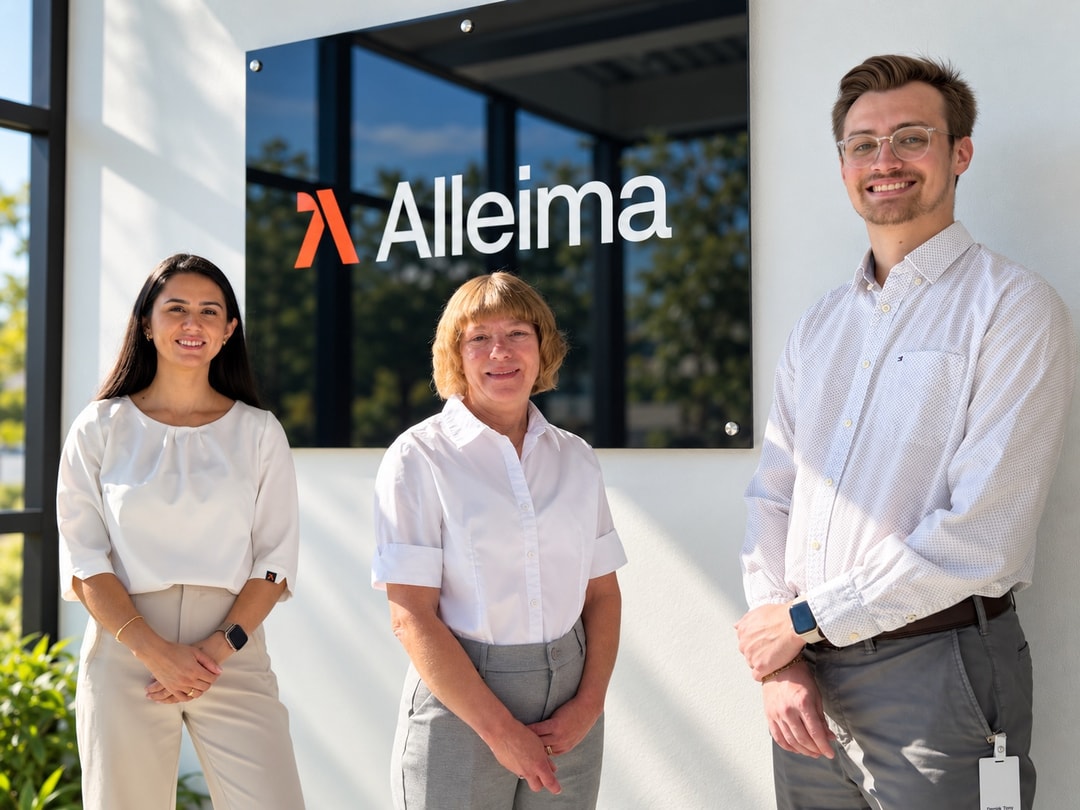
Whatever alloy your project calls for, Alleima's local U.S. heat exchanger team is ready to help, with material selection, spec questions, manufacturing capability, or a quote. Access the guide to see the full range, then reach out with the details of your project.
Access the Guide: Hard-to-Find Alloys, Made Locally
Looking for specialized alloys that are difficult to source? Get the technical guide to learn how local manufacturing can provide access to hard-to-find alloys while helping streamline your supply chain. Fill out the form below to download the guide.


